





Harry Blackwell Chevrolet

Blog / Malden Chevrolet Dealer

Trax vs Trailblazer for Everyday Small SUV Decisions

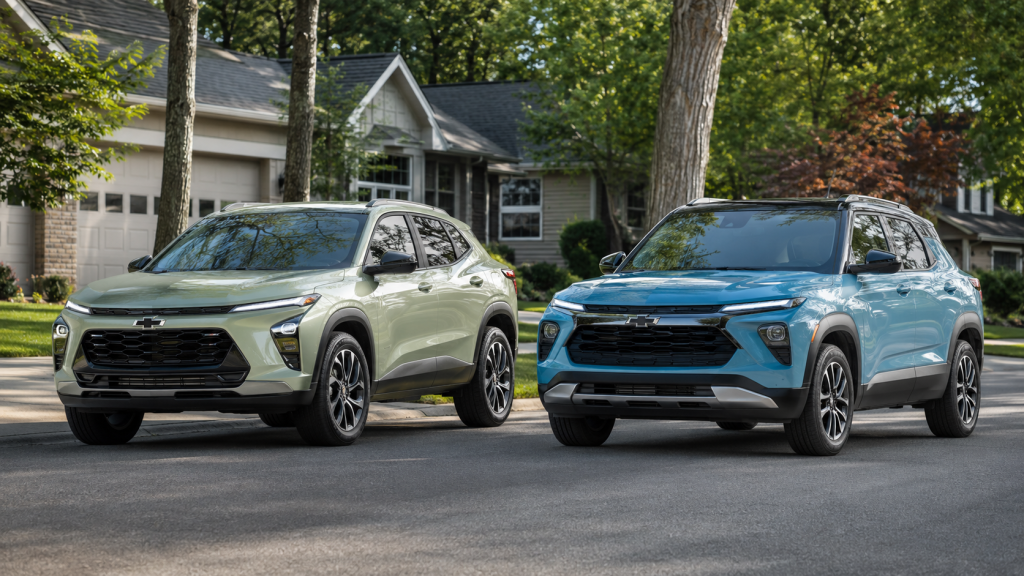
Trax vs Trailblazer gets easier to sort out when you picture your normal week. Both seat five and carry nearly the same total cargo volume. However, their layouts and drivetrain choices point toward different routines. Trax keeps the formula simple with front wheel drive and one turbo engine. Trailblazer adds available all wheel drive, another turbo engine, and a longer cargo path. Therefore, the decision starts with where you drive, what you carry, and how much choice you want.

Where Trax and Trailblazer Overlap

What separates Trax vs Trailblazer in daily life? The biggest splits involve drivetrain choice, cargo shape, and available engine output. However, the two Chevrolet crossovers overlap more than their names suggest.

Both models seat five people. Additionally, rear legroom is very close between them. Trax offers 38.7 inches in the second row. Trailblazer provides about 39 inches. Therefore, rear passenger space alone is unlikely to settle the choice.

Moreover, cargo volume tells a similar story. Trax provides 25.6 cubic feet behind the rear seat. Trailblazer provides 25.3 cubic feet in the same area. With rear seats folded, both offer about 54 cubic feet.

That close match shifts attention toward your routine. A commuter may care more about a simple front wheel drive layout. A traveler may care more about available all wheel drive. Moreover, someone carrying long gear may prefer the Trailblazer folding front passenger seat.

For this reason, Trax vs Trailblazer works best as a routine comparison. Start with passengers and cargo, then move toward drivetrain and engine choices.

Passenger Space and Cargo Shape

Which one gives passengers and cargo more room? Their basic measurements are close, but the cargo layouts serve different tasks. Therefore, cubic feet should not be the only number you review.

Additionally, Trax has a broad rear cargo area behind the second row. That space suits groceries, backpacks, pet gear, and luggage without folding rear seats. Additionally, its 38.7 inches of rear legroom leaves useful space for adult passengers.

Trailblazer stays close in those same measurements. However, its fold flat front passenger seat changes how long items can travel inside. Chevrolet lists up to 8.5 feet of cargo length with the seats arranged for long loads.

That layout can matter for items such as flat pack furniture, trim pieces, fishing rods, or outdoor gear. Instead of focusing only on total volume, think about the shape of what you carry.

Before choosing either model, test the cargo area with your own routine in mind:

  • Check whether your stroller, pet crate, cooler, or work bag fits behind the rear seat without rearranging passengers.
  • Fold the rear seats and note whether the load floor gives enough length for larger items you move regularly.
  • If long gear matters, test the Trailblazer front passenger seat and confirm that the added length solves your specific need.

Trax vs Trailblazer remains close on ordinary passenger and cargo space. By contrast, Trailblazer gains a distinct edge when interior load length matters.

When Available All Wheel Drive Matters

When does Trailblazer all wheel drive make more sense? It gives the driver another drivetrain choice for trips where four wheel power delivery is preferred. Trax uses front wheel drive across the lineup.

Additionally, front wheel drive sends engine power to the front wheels. That layout keeps Trax straightforward for commuting, errands, and paved travel. In addition, it removes an extra drivetrain choice from the shopping process.

Trailblazer offers available all wheel drive. The setup can send power through all four wheels when the drivetrain calls for it. Therefore, shoppers who want that layout have a clear reason to focus on Trailblazer.

The decision should still match your normal routes. If most miles involve paved streets and highway commuting, Trax may cover the task well. If your plans include gravel lanes, steep driveways, or more varied travel, Trailblazer offers another drivetrain path.

Trax vs Trailblazer becomes much easier once AWD enters the discussion. One model keeps front wheel drive standard across every trim. The other gives you a choice.

Engine Choices and Longer Trip Needs

Does Trailblazer's stronger engine make it the automatic choice? No. Engine output matters most when it matches the way you plan to use the SUV.

Moreover, Trax uses a 1.2 liter turbo engine with 137 horsepower and 162 pound feet of torque. That single engine keeps the lineup simple. Therefore, shoppers do not need to sort through several engine combinations.

Trailblazer also offers a 1.2 liter turbo. In addition, an available 1.3 liter turbo raises output to 155 horsepower and 174 pound feet. That gives shoppers another step when they want more engine output.

Trailblazer also separates itself through light trailer use. Chevrolet lists up to 1,000 pounds of towing for the 2026 Trailblazer. Trax is not rated for towing. Therefore, even a small trailer plan can settle the comparison quickly.

Before choosing, think through these routine questions:

  • Do you want one engine choice, or do you want the option of higher output?
  • Will you ever carry a small trailer that stays within the Trailblazer published rating?
  • Do long cargo items appear in your routine more than ordinary bags, groceries, and passenger gear?

These answers may matter more than a small difference in total cargo volume. Moreover, they connect each specification to a task you already know.

Which Chevrolet Small SUV Fits Your Routine

Therefore, the final Trax vs Trailblazer decision should reflect the week you already live. Trax suits shoppers who want five seats, useful cargo room, and a straightforward front wheel drive layout. Its rear passenger space also stays close to Trailblazer.

Trailblazer makes more sense when AWD, longer interior cargo length, or light towing enters the plan. Additionally, the available 1.3 liter turbo gives another engine choice. Those differences create clearer reasons to move toward Trailblazer.

For commuters and errand heavy schedules, Trax keeps the setup simple. For mixed travel and more varied cargo needs, Trailblazer offers more configuration choices. Still, both remain compact Chevrolet crossovers with similar seating and cargo volume.

The best comparison happens when you test your own routine inside both cabins. Sit in the rear seat, fold the seats, and open the cargo area. In addition, check the controls and visibility from the driver's seat. Harry Blackwell Chevrolet can place Trax and Trailblazer side by side for that comparison. Then you can choose the one that fits your week with fewer compromises.


Posted in:

Related Posts

Chevy Bolt Charging: What First Time EV Owners Need

Chevy Bolt charging becomes easier to plan once you know where the car will park and how far you drive. Therefore, most daily charging can happen while the Bolt sits overnight. The first step is matching your routine with the available power source. For this reason, a regular household outlet may cover shorter daily trips. However, a 240 volt setup restores more energy during the same parking window. Public fast charging then supports longer travel beyond Malden and nearby communities. Therefore, the goal is simple. Learn what each charging level does, how long it takes, and what to check before plugging in. Start With Your Daily Miles and Parking First, your daily mileage gives you the clearest starting point for Chevy Bolt charging. Additionally, a short commute may require less energy than you expect. However, longer routes need more overnight charging power. How far do you drive on a normal day? That number shows how much battery energy you need to replace each night. The answer does not require advanced math. Therefore, start with three details: more Record your normal round trip mileage, including errands and school stops. Check whether the Bolt can remain parked near an outlet overnight. Note how many hours the car usually stays parked before the next trip. For this reason, a driver covering 25 miles may replace that energy through a standard outlet. A driver covering 70 miles may prefer 240 volt charging. In addition, parking access matters. A garage, driveway, or dedicated parking spot makes home charging easier to arrange. However, renters may need permission before adding electrical equipment. Therefore, think about where the cable will reach. Avoid extension cords unless Chevrolet and the charging equipment maker permit them. A licensed electrician should inspect any outlet planned for steady charging. Chevy Bolt charging works best when the home setup matches the miles driven. That simple match removes much of the confusion. How Does Chevy Bolt Charging Work? First, Chevy Bolt charging moves electricity from an outlet or public station into the battery. Additionally, the car controls how much power enters at each moment. At home, alternating current travels through the charging cord. The Bolt then converts that power before storing it in the battery. Public fast chargers send direct current toward the battery instead. What happens after you connect the cable? The car and charger complete a safety check before energy starts moving. Then, the screen shows charge status and estimated completion time. Therefore, plugging in is only the first step. The Bolt also checks battery temperature, current battery level, and available charger output. In addition, Level 1 and Level 2 charging use the car's onboard charging hardware. DC fast charging follows a different electrical path. That path supports faster energy transfer during travel stops. In addition, the car slows the charging rate as the battery gets fuller. This protects the battery and manages heat. Therefore, the last part of a fast charging session may take longer. Therefore, Chevy Bolt charging does not require you to manage each electrical step. Still, knowing the basic path makes charger choices easier. Choose Between Level 1 and Level 2 at Home First, Level 1 uses a standard 120 volt household outlet. By contrast, Level 2 uses 240 volt power from a suitable outlet or wall unit. Which option fits your routine? Level 1 may work when daily mileage stays low and the Bolt remains plugged in overnight. Level 2 fits drivers who need more energy restored before morning. A standard outlet adds energy slowly. However, it may still cover a light commute when the car stays connected for several hours. By contrast, Level 2 sends more power during the same parking period. The returning Bolt can accept up to 11.5 kW through Level 2 charging. Before choosing, review these points: Level 1 may fit short daily routes and long overnight parking windows. Level 2 may fit longer commutes, frequent errands, or limited parking time. A licensed electrician should inspect the circuit before steady home charging begins. Additionally, home charging equipment also needs the correct circuit size. In addition, the outlet and wiring must match the charger’s power draw. Chevy Bolt charging at home becomes simple once the setup fits your routine. Plug in after the final trip, then unplug before leaving. How Long Does Chevy Bolt Charging Take? First, Chevy Bolt charging time changes with battery level, charger output, and accepted power. A nearly empty battery takes longer than a small top up. How long should you expect to wait? The answer starts with how much energy the battery needs. Therefore, charging from 60 percent to 80 percent takes less time than charging from 10 percent. Level 1 works slowly through a household outlet. Therefore, it suits small daily energy needs and long parking periods. Level 2 adds energy faster through 240 volt power. It can restore a larger share of the battery during an overnight session. By contrast, DC fast charging serves travel stops. The 2027 Bolt can accept up to 150 kW at a compatible station. Additionally, Chevrolet estimates about 25 minutes from 10 percent to 80 percent. However, that estimate will not match every stop. Charger output, battery temperature, station demand, and starting battery level all shape the session. In addition, fast charging slows as the battery nears a high charge level. Therefore, drivers may spend less time by leaving before the battery reaches full. Chevy Bolt charging time makes more sense when you compare the charging method with the trip. Therefore, home charging serves routine travel. By contrast, fast charging serves longer routes. Use Public Charging Without Guesswork First, public charging begins with four checks: connector, charger speed, access, and payment. However, the nearest station may not fit every charging need. Can you use any station shown on a map? No. First, confirm that the station supports the Bolt’s NACS charge port. Additionally, check the charger’s listed output. The myChevrolet mobile app can show station locations and support route planning. However, drivers should still review current station status before leaving. Use this process before a public charging stop: Confirm the station has a connector that fits the Bolt. Check whether the charger offers Level 2 or DC fast charging. Review access hours, price details, and current charger status. Some stations sit inside parking garages, dealerships, hotels, or shopping areas. Therefore, access may change after business hours. In addition, some networks require an account or app. Setting that up before travel prevents delays at the charger. Chevy Bolt charging at a public station should start with the cable connection. Then follow the station screen or app prompts. Therefore, public charging does not need to feel uncertain. A short review before departure can prevent wasted stops. Plan Charging Around Southeast Missouri Travel First, home charging may cover most trips around Malden, Kennett, Poplar Bluff, and nearby communities. However, longer routes may require one planned public stop. How should you prepare for travel beyond your normal area? Start with the full route, then locate compatible chargers before leaving. Additionally, add a backup station when choices are limited. The 2027 Bolt carries an EPA estimated range of 262 miles. However, speed, hills, cabin heating, cooling, and cargo can change available range. Therefore, do not plan around the full estimate alone. Leave room for detours, missed exits, and charger availability. A trip toward Cape Girardeau, Memphis, or St. Louis may require different planning. In addition, highway speeds can use energy faster than local travel. Before departure, set the desired charge level and review the route in the app. Then confirm that each planned station supports the NACS connector. Chevy Bolt charging can fit rural and regional travel when home charging handles routine miles. Public fast charging then covers longer days. Therefore, EV ownership becomes easier once charging follows a repeatable pattern. Charge at home, plan public stops, and check station details before each longer trip.

What a Clear Vehicle Buying Process Should Feel Like Before You Sign

What should a clear vehicle buying process actually feel like before you sign paperwork? For many shoppers, confidence during a purchase comes less from speed and more from understanding how each stage of the process works and what communication should look like throughout the experience. Vehicle selection, financing discussions, trade evaluations, paperwork preparation, and ownership review all operate as connected parts of the dealership process. When those systems are explained clearly, buyers are often better able to evaluate vehicles, understand timelines, and make decisions without feeling rushed or uncertain. Understanding What a Transparent Vehicle Buying Process Actually Looks Like Many shoppers associate a positive dealership experience with how comfortable and informed they feel throughout the process rather than how quickly paperwork is completed. A transparent buying experience usually involves clear explanations around: vehicle pricing financing structure trade evaluation timing ownership costs registration requirements document review opportunities The process itself often follows a structured operational flow. Vehicle research and test driving typically happen first because dealerships need to confirm: more vehicle fit driving comfort ownership goals budget alignment before financing or final paperwork discussions begin. After vehicle selection, dealerships may begin coordinating: lender communication trade appraisal systems registration preparation title verification payment structure review These systems often involve multiple departments working simultaneously. That coordination is one reason the process may sometimes feel slower near the final stages even when communication remains organized and transparent. For many shoppers, understanding that workflow helps separate normal operational timing from situations where explanations feel unclear or incomplete. Why Vehicle Research Changes the Entire Buying Experience Preparation often changes the quality of dealership conversations before shoppers ever arrive on-site. Buyers who understand: vehicle history ownership priorities budget expectations financing goals trade value estimates are often better positioned to evaluate whether the process feels consistent and understandable. For example, researching a used Chevrolet vehicle beforehand may help shoppers understand: mileage expectations feature availability trim differences ownership costs maintenance history considerations That preparation changes how shoppers evaluate both the vehicle itself and the dealership communication surrounding it. Test drives also play a larger role than many buyers initially expect. A dealership may explain specifications or ownership features clearly, but real-world driving behavior still matters because drivers are evaluating: visibility braking feel seating comfort cabin layout road noise acceleration response during actual operation. This is one reason a transparent dealership process typically allows time for questions, comparison discussions, and ownership evaluation before final paperwork preparation begins. Shoppers who feel pressured to move through vehicle evaluation too quickly often leave with more uncertainty because confidence usually develops through understanding rather than speed alone. How Financing and Paperwork Systems Work Before You Sign Financing and paperwork stages create some of the most common misunderstandings during the buying process because many operational steps happen behind the scenes. When financing begins, dealerships may coordinate: lender approvals credit verification registration processing title preparation trade payoff communication payment structure review Some approvals happen quickly while others may require additional verification depending on: lender requirements trade balance coordination registration complexity vehicle ownership status This is one reason paperwork timing may vary between buyers even during similar purchases. For example, a financed vehicle purchase involving a trade with an existing loan may require coordination between: the dealership the lender registration systems payoff verification departments That process may take longer than a straightforward purchase without financing or trade involvement. A transparent buying experience generally includes clear explanations around: what documents are being reviewed what financing terms mean why certain approvals are needed what fees are associated with ownership when signatures are actually required Shoppers should also have opportunities to review details before signing finalized paperwork. Understanding: payment structure financing duration warranty coverage ownership obligations registration documentation helps reduce uncertainty before the transaction is completed. Understanding the Difference Between Guidance and Pressure One of the most misunderstood parts of the dealership experience is the difference between operational structure and actual purchase pressure. Dealerships often operate within structured workflows because inventory coordination, lender communication, and customer scheduling all affect timing throughout the day. However, structure alone is not necessarily the same as pressure. A healthier buying experience usually includes: explanation before signatures time for questions clear pricing discussion review opportunities communication consistency Meanwhile, shoppers often describe pressure negatively when: explanations feel rushed questions are avoided timelines feel unclear communication changes suddenly review opportunities feel limited This distinction matters because many buyers search online for ways to avoid dealership pressure without fully understanding what a normal purchasing workflow may look like operationally. For example, preparing financing documents or gathering signatures near the end of the process may feel faster simply because the dealership is coordinating: lender timing registration processing delivery scheduling vehicle preparation simultaneously. That does not automatically mean the process lacks transparency. Communication quality is often what determines whether buyers feel informed or overwhelmed during those transitions. Why Communication Consistency Shapes Buyer Confidence Many shoppers ultimately judge the dealership experience less by negotiation alone and more by whether communication remains consistent from beginning to end. Confidence often increases when buyers understand: what stage comes next why certain information is needed how timelines are changing what ownership costs involve what paperwork is being reviewed This becomes especially important during: financing transitions trade evaluations vehicle delivery preparation registration coordination because these stages involve multiple moving parts behind the scenes. For example, a dealership explaining why lender approval timing changed may create a very different customer experience than leaving buyers uncertain about delays entirely. Clear communication may help shoppers better evaluate: transparency professionalism organization responsiveness overall dealership trust throughout the process. For many buyers, a strong dealership experience is not necessarily defined by how quickly the process ends. It is often shaped by whether each stage feels understandable, organized, and consistent before final paperwork is signed.